Flexion Distraction Therapy in Dee Why: A Gentle, Effective Way to Treat Lower Back Pain, Disc Pain, Sciatica, Scoliosis and Mobility Issues
If you’ve been living with acute or chronic lower back pain, sciatica or mobility issues that just won’t settle, you’ve probably tried a few things already — stretching, painkillers, maybe even rest. At Dee Why Chiropractic Care, one of the most effective tools we use for these exact problems is flexion distraction therapy, delivered using our Raphael O1M auto flexion table with air drop technology.
This blog explains what flexion distraction therapy is, how it works, who it helps, and why our Dee Why clinic’s equipment gives Northern Beaches patients an edge when it comes to treating lower back pain, disc pain, sciatica, scoliosis and general spinal mobility problems.
What Is Flexion Distraction Therapy?
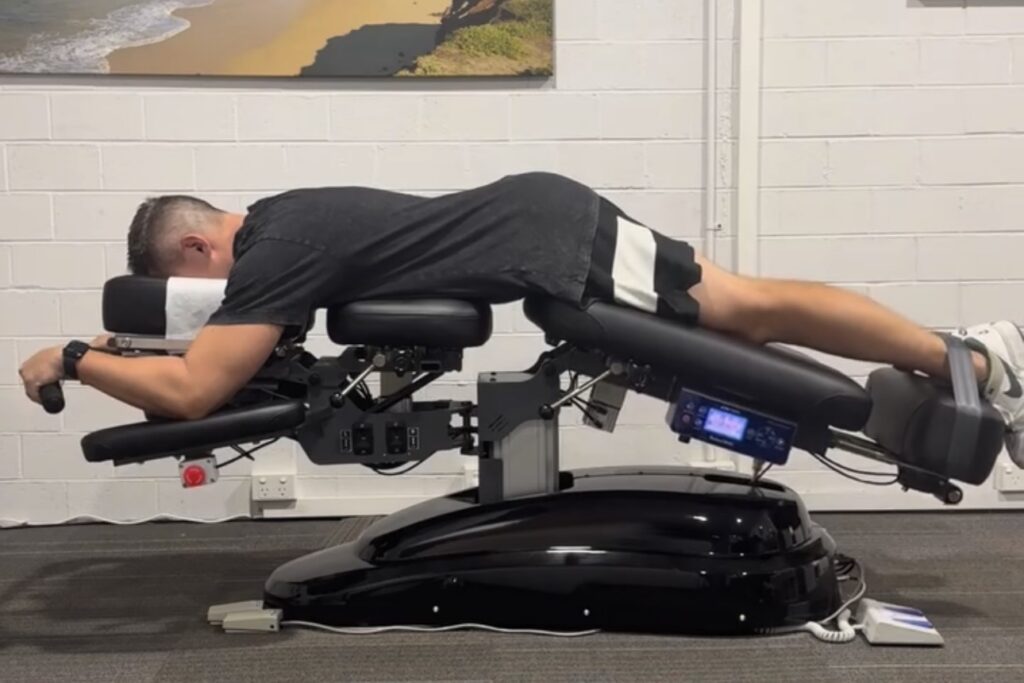
Flexion distraction therapy is a gentle, non-surgical treatment technique that uses a specialised table to slowly and rhythmically stretch (distract) the spine while it’s flexed. Unlike traditional manual adjustments, there’s no twisting or forceful thrust involved — the table does the work through slow, controlled movement, making it one of the most comfortable treatment options available for people with irritated nerves or sensitive lower backs.
The gentle stretching motion:
- Opens up and decompresses the space between each vertebrae
- Reduces pressure on spinal discs and nerves
- Improves circulation and fluid movement in and around the spine
- Encourages the spine to move more freely through its natural range
Our Equipment: The Raphael O1M Auto Flexion Table
At our Dee Why clinic, we use the Raphael O1M automated flexion distraction table with air drop capability — a step above standard flexion tables. What sets this table apart is its ability to perform lateral flexion distraction, meaning we can stretch and mobilise the spine side-to-side, not just front-to-back.
Flexion distraction treatment is particularly valuable to treat conditions that don’t respond as well to standard treatment:
Acute and Chronic Lower Back Pain
Whether your lower back pain came on suddenly after an awkward lift, or it’s been a nagging, chronic issue for months or years, flexion distraction therapy can help. The gentle stretching action reduces pressure on the joints and soft tissue of the lower back, easing pain in the acute stage while also addressing the underlying stiffness and mechanical restriction that often drives chronic, recurring back pain.
Whether your lower back pain came on suddenly after an awkward lift, or it’s been a nagging, chronic issue for months or years, flexion distraction therapy can help. The gentle stretching action reduces pressure on the joints and soft tissue of the lower back, easing pain in the acute stage while also addressing the underlying stiffness and mechanical restriction that often drives chronic, recurring back pain.
Disc Pain
Because flexion distraction gently separates the vertebrae, it’s particularly effective for pain coming from the spinal discs themselves — including disc bulges and disc degeneration. The controlled distraction reduces pressure within the disc, creating space for irritated structures to settle and heal, making it one of the most disc-friendly treatment techniques available.
Sciatica
Sciatica often stems from a disc bulge or nerve irritation in the lower back that refers pain, tingling or numbness down the leg. Flexion distraction gently creates space around the affected nerve root, reducing the compression that’s driving the pain — often providing relief where other treatments have plateaued.
Scoliosis
Because our table can distract laterally as well as in flexion, it’s particularly useful for people with scoliosis, where the spine curves sideways. This lateral movement helps improve mobility and symmetry through the curve in a way that a standard straight-line flexion table simply can’t achieve.
General Mobility Issues
Even without sciatica or scoliosis, many patients simply have stiff, restricted spines from years of sitting, poor posture, or previous injury. The controlled stretching action of the table helps restore normal joint mechanics and range of motion safely and comfortably.
Why Choose Flexion Distraction Over Other Treatments?
- Gentle and low-force — ideal for patients who find manual adjustments too intense, or who have disc-related pain that’s sensitive to load
- No recovery downtime — most patients can return to normal activity straight after treatment
- Targets the root cause — rather than just easing symptoms, it addresses the mechanical compression driving the pain
- Backed by decades of clinical use — flexion distraction has long been a mainstay of chiropractic care for disc-related back and leg pain
See It In Action
Here’s a short video showing flexion distraction therapy in action at our Dee Why clinic:
Is Flexion Distraction Therapy Right for You?
If you’re dealing with acute or chronic lower back pain, disc pain, sciatica, scoliosis, or general mobility issues and haven’t found lasting relief, flexion distraction therapy may be exactly what your spine needs. At Dee Why Chiropractic Care, we assess every patient individually to determine whether this gentle, targeted approach is the right fit for your condition.
Book an appointment today at our Dee Why clinic and find out how our Raphael flexion distraction table can help you move and feel better — serving patients across Dee Why, Curl Curl, Cromer, Narraweena, Beacon Hill and North Manly.
📍 Shop 4, 1–3 Sturdee Parade, Dee Why NSW 2099 📞 (02) 9971 9428 🌐 deewhychirocare.com.au